Kagony: A Display Font That Elevates Branding Projects
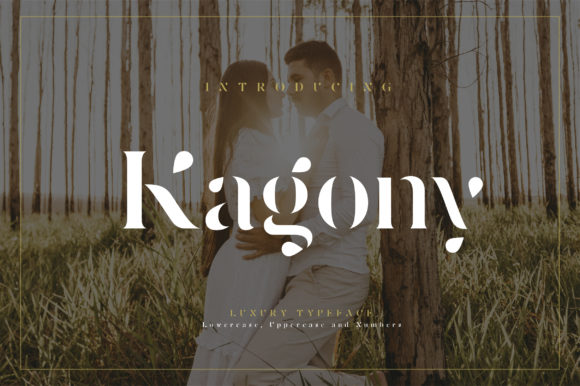
There’s something about opening a blank brand board and knowing that the right font can transform an entire project. I recently had the chance to test Kagony in a real branding scenario for a boutique skincare line, and it quickly became one of my go-to choices. This display font has a quiet confidence that speaks volumes—its curves are smooth but not overly soft, its lines are clean yet expressive, and it carries a sense of elegance without feeling stuffy.
A Font That Speaks to the Soul of a Brand
Kagony isn’t just another display font—it’s a statement. Its design feels like a balance between modern minimalism and classic typography. The letterforms have a gentle rhythm, with subtle serifs that add refinement without overpowering the design. When I placed it on a logo concept for the skincare brand, it immediately felt like the perfect match. It carried the brand’s message of purity and sophistication effortlessly.
I tested Kagony across several formats: a logo draft, a brand board, packaging mockups, business cards, and even a website header. Each time, it maintained a consistent visual tone. On the packaging mockup, it worked beautifully as a label font, giving the product a premium feel without being too ornate. The same could be said for the website header—Kagony added a touch of class that elevated the overall user experience.
Where Kagony Shines in Real-World Design
Kagony is clearly best suited for display purposes rather than body text. In a logo design context, it shines. Its unique character makes it ideal for creating a memorable brand mark that stands out. For a café visual refresh I was working on, Kagony served as the headline font on menu boards and social media posts, adding a warm, inviting energy that aligned perfectly with the brand’s vibe.
In editorial design, it works well for titles and subheadings. I used it on a blog header for a handmade shop, and it gave the post an artistic flair without distracting from the content. On Instagram posts, it performed admirably as part of a layered graphic, where it helped draw attention to key phrases without overwhelming the layout.
However, there are limitations. Kagony is not ideal for long paragraphs or small sizes. When I tried using it in body text for a brochure, the readability suffered. Similarly, in formal corporate settings, it might not convey the level of professionalism required. It’s more of a creative tool meant for short phrases, headlines, and decorative accents.
Font Pairing and Practical Considerations
Kagony pairs well with a range of typefaces, depending on the mood you’re going for. For a balanced look, I found that pairing it with a sans serif font like Helvetica Neue worked great in a brand identity system. The contrast between the two fonts created a dynamic visual hierarchy. For a more elegant feel, a serif font such as Garamond complemented Kagony nicely, especially in print materials.
If you're planning to use Kagony in client work, it's important to check the licensing terms. Ensure that the font is properly licensed for commercial use, especially if it will appear on merchandise, packaging, or digital products. Many premium fonts require specific licenses for different applications, and it's crucial to respect those terms to avoid any legal issues down the line.
Another practical tip is to test Kagony in various formats before finalizing a design. How it looks on screen may differ slightly from how it appears when printed. Always review it at different sizes and on different backgrounds to ensure it performs well across all mediums.
Final Thoughts on Kagony’s Role in Creative Work
Kagony has proven itself to be a versatile and visually appealing display font that adds character and charm to branding projects. Whether it’s a logo, a packaging label, or a social media graphic, this font brings a sense of elegance and uniqueness that can elevate your design work. While it may not be suitable for every application, when used thoughtfully, Kagony can become a powerful asset in your creative toolkit.